Small electric commercial vehicles are ideal for FMCG, retail, and Kirana deliveries in city traffic. They eliminate fuel wastage from idling, reduce maintenance costs, improve driver efficiency, and offer predictable daily range, making them financially superior to diesel vehicles for last-mile logistics.
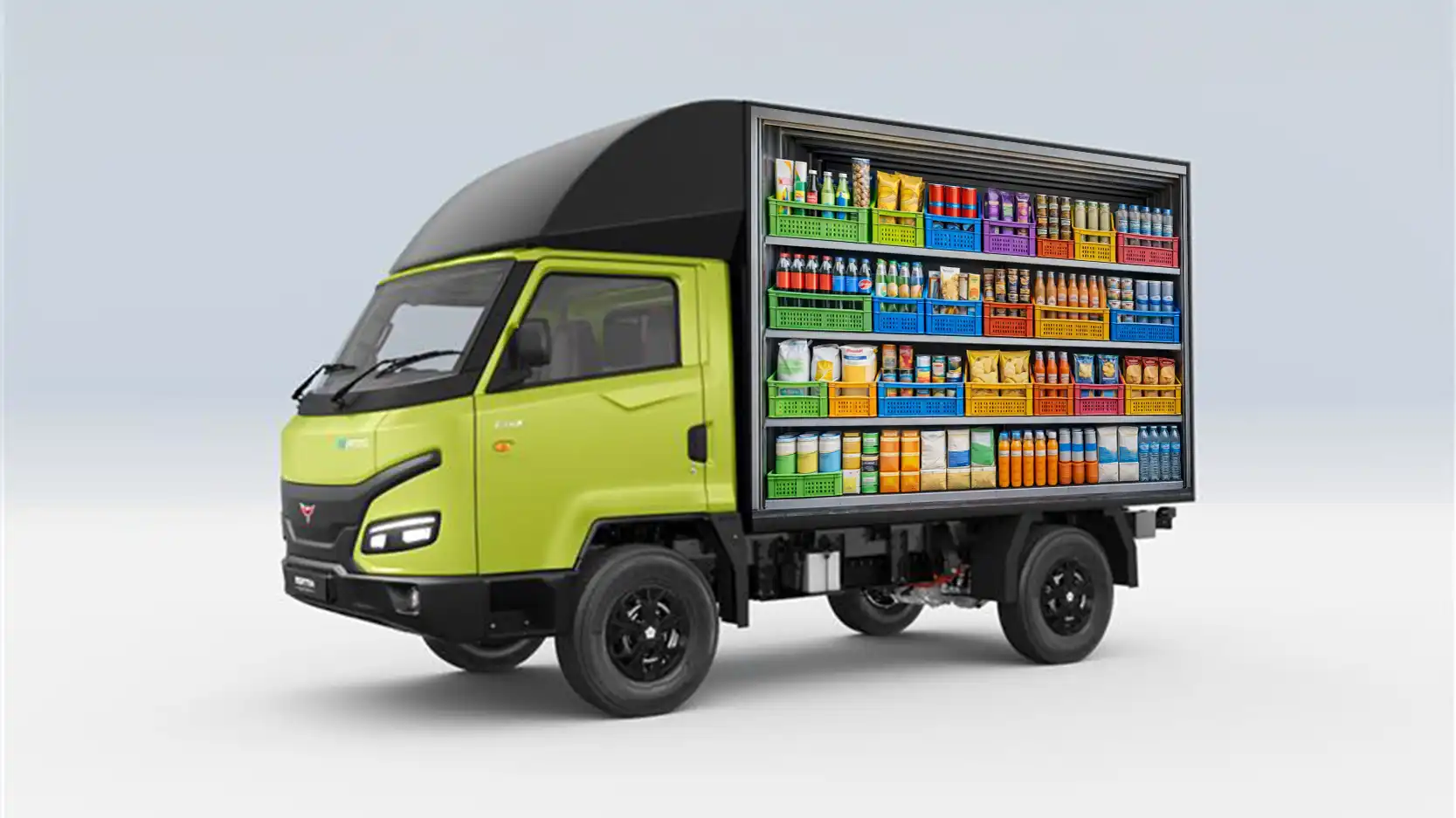
If you run a delivery fleet for FMCG, retail, or local Kirana distribution, you are likely losing money every single time your driver hits the brakes in city traffic. That is the hard reality of logistics today. The solution isn't to drive less; it's to change the machine you are driving. The Montra Electric Eviator isn't just an alternative to diesel; for stop-start city deliveries, it is financially superior right out of the gate. Small electric commercial vehicles stop the cash bleed caused by idling engines, rising fuel costs and frequent clutch replacements. If your business involves moving heavy crates of milk, sacks of rice, or beverages through congested Indian streets, the Montra Electric Eviator offers immediate operational savings that a diesel pickup simply cannot match. You don’t need to wait for the future; the math works today.
Let's dig into why this change is necessary now. Traditional internal combustion engines (ICE) hate the way we drive in India. Think about your typical delivery route. It’s not a smooth highway run. It’s a chaotic mess of signals, potholes, jaywalkers and narrow lanes. Your driver is constantly changing gears in a diesel small commercial vehicle. If they stop in between their journey, the engine is still running just to keep the vehicle alive, a situation known as idling. Each time the driver accelerates from a standstill carrying a full load, the engine runs the hardest and consumes the most fuel in the most inefficient manner possible. Your "claimed mileage" will thus never match the actual mileage. The Eviator argument manages to flip the above logic. The reason is that these electrical motors work best precisely in these conditions. When the car stops, the electric motor stops using electricity. End of the story. There is no electricity wasted as the car sits there. When the car starts, it uses instantaneous torque. There is no revving the motor, no slipping the clutch and the electricity used is proportional to the work done, as opposed to generating heat.
Most fleet owners consider the sticker price of the vehicle and the price of fuel. But the real killer in logistics is what is known as the "hidden cost" of maintenance and downtime. This is where the Eviator widens the gap. A diesel drivetrain is a beast. It's got thousands of moving parts that vibrate with each other, rub against each other and heat up. You have oil filters, fuel filters, air filters, timing belts, pistons, spark plugs, radiators. All those things break-in the rough-and-tumble world of last-mile delivery. Each day that your truck is in the repair shop having the oil changed or the clutch replaced, that’s a day that the truck isn’t delivering products. This equates to monetary loss. Now, with an electrical vehicle, the equations are far better. A car has many parts that require constant servicing. Notably, the motor does not require any servicing since the parts inside the motor are sealed. Only the wheels, including the suspension, are the major moving parts on the vehicles. This reduces the overall downtime because the car can be used all the time without the costs that are involved maintaining the vehicle.
There is another factor that impacts your bottom line, though it rarely shows up on a spreadsheet: the human element. Driving a vibrating, noisy diesel truck for 8 to 10 hours in bumper-to-bumper traffic is physically exhausting. A tired driver makes mistakes. They scratch the vehicle, they miss delivery windows, or they treat your customers poorly. The Eviator is silent and vibration-free. It’s an automatic, so there’s no clutch to press a thousand times a day. We’ve seen that drivers in electric fleets are less fatigued at the end of a shift. A happier, fresher driver protects your asset better and represents your company better. It’s a soft benefit that has hard financial consequences.
FMCG and Kirana distribution are predictable. That's not a very difficult road trip since your vehicles are running a predictable schedule. Perhaps an 130-150 km daily schedule. A trip starting and ending at a distribution warehouse and a number of shops in between. The Eviator handles that with ease on a single charge. There is no need to worry about finding a public charging outlet on the next corner because your vehicle is the charging outlet. You charge it overnight like you charge your phone. It is full in the morning. Range anxiety is not a concern when delivery is done on a fixed route.
Finally, we get to the green aspect. While profit is your priority, your clients (especially big FMCG brands) are under pressure to reduce their carbon footprint. Many large companies are now mandating "green logistics" in their contracts. By running a fleet of small electric commercial vehicles, you aren't just saving money; you are future-proofing your business against these new vendor requirements. You become a more attractive logistics partner to big brands who need to show their investors that they are sustainable.
The transition isn't coming; it's here. The inefficiency of diesel in stop-start traffic is a financial leak you can plug today. By switching to the Montra Electric Eviator, you trade high operational costs and maintenance headaches for predictability and profit.
1. Why are small electric commercial vehicles better than diesel for city deliveries?
Small electric commercial vehicles are more efficient in stop-start city traffic. Unlike diesel vehicles, electric vehicles do not consume energy while idling and deliver instant torque during acceleration. This makes them ideal for congested urban routes where frequent braking and starting is unavoidable.
2. How does the Montra Electric Eviator reduce daily operating costs?
The Montra Electric Eviator significantly lowers operating costs by eliminating fuel expenses and reducing maintenance requirements. There are no oil changes, clutch replacements, or complex engine components, resulting in lower servicing costs and minimal vehicle downtime.
3. Is the Montra Electric Eviator suitable for heavy FMCG and Kirana loads?
Yes, the Eviator is well suited for carrying heavy FMCG and Kirana loads such as milk crates, grocery supplies, and beverage cases. Its electric motor provides consistent power and strong low-speed torque, even when fully loaded.
4. Can the Eviator handle daily delivery routes without range issues?
Most FMCG and Kirana delivery routes follow a fixed daily pattern, typically between 130–150 km. The Montra Electric Eviator can comfortably complete these routes on a single overnight charge, removing concerns about public charging availability.
5. How does switching to electric vehicles support green logistics goals?
Using electric commercial vehicles helps logistics operators reduce carbon emissions and align with sustainability requirements set by large FMCG and retail brands. This not only improves environmental impact but also makes fleet owners more competitive when bidding for long-term delivery contracts.

.svg)


.png)