Choosing an electric commercial vehicle in India starts with understanding your daily operations. The right EV depends on your routes, payload needs, charging availability, and total running costs. With growing options ranging from compact electric mini trucks to heavy-duty electric trucks, businesses now have reliable choices that balance performance, efficiency, and long-term savings.
The transition to electric commercial vehicles in India is picking up pace. Induced by the rising costs of fuel along with emission regulations and the focus on sustainability, fleet operators are now considering electric trucks in India more so than ever before. Whether electric mini trucks in India used for last-mile delivery solutions or electric heavy-duty trucks in India used for larger-scale logistics solutions, growth in the segment is taking place at a rapid rate. It becomes very important to choose the right electric commercial vehicles in India.
This article discusses the critical elements that will enable companies to make the correct decision amidst the developing scenario of electric mobility in India.
The beginning point in choosing an electric commercial vehicle is knowing how the vehicle will be utilized. Various uses require different attributes for the commercial vehicles. For instance, city logistics and delivery of goods through e-commerce can be served by electric mini trucks in India because of their small size, relatively lower operating cost, and ability to navigate through cities. Conversely, goods transportation between cities or bulk cargo transportation can be served by electric heavy trucks in India that can carry heavy loads and can operate for long hours.
Among the questions that must be asked are:
Clear answers to these questions will assist in short-listing the most appropriate category of electric cargo vehicles in India.
Despite higher initial costs for electric commercial transport compared to diesel transport, it has often been noticed that costs of ownership paint a different picture. Electricity costs less than diesel, and there are fewer components that require maintenance for an electric commercial vehicle.
When evaluating TCO, one should examine:
Comparison of the above factors in various types of electric commercial vehicles India will lead businesses to analyze the long-term financial feasibility, not merely relying on the initial costs.
It is important that charging infrastructure is integrated into fleet efficiency. It is necessary that a business evaluates whether there is the opportunity for depot charging or opportunity charging.
For smaller fleets or delivery networks in an urban area, fixed depots for charging can be adequate. For larger fleets or delivery networks where time is of essence, faster methods of vehicle charging can be necessary. Scheduling of vehicle charges and knowing vehicle range can be crucial for continuous delivery operations using electric mini trucks in India or electric heavy-duty trucks in India.
Parameters like range, weight-carrying capacity, and robustness of performance must correlate with the typical working requirements. The range of electric trucks in India is expanding to cater to the Indian roads, climatic conditions, and usage patterns. Reliability is very important in commercial use, wherein downtime can affect profitability. Analyzing a manufacturer's reliability based on their past performance, support, and availability of service networks can give an idea about overall reliability for electric commercial vehicles India.
In cases where companies are implementing a gradual electrification strategy for their fleets, integration with their current fleets and vehicles could be a consideration when purchasing new electric commercial vehicles India.
Another key consideration is scalability. The use of electric commercial vehicles that have applications in a variety of use cases like cargo transportation or municipality use provides scalability as and when business requirements change.
Electric commercial vehicles India enable companies to meet the sustainability goals and standards set by the government and the international community. Emissions from these vehicles are reduced since they do not have exhaust pipes. This enables businesses to meet ESG goals regarding the environment.
In India, with increasingly stringent emission norms, the shift to electric delivery vehicles will also enable organizations to prepare for the uncertainty of changing policies.
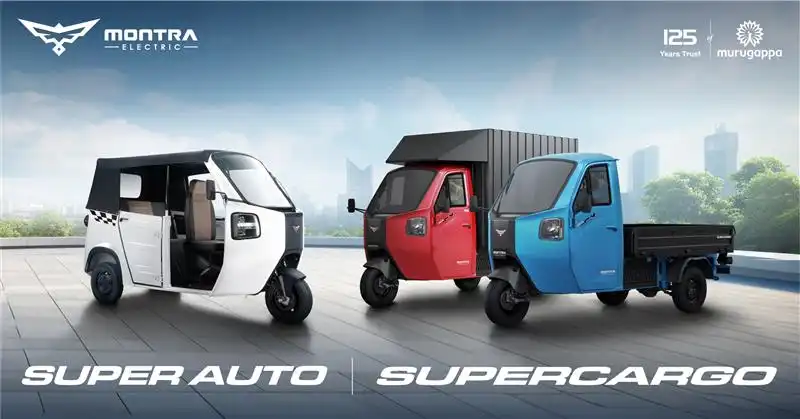
The electric commercial vehicles market in India has increased its offerings to cater to the needs of customers who are looking for electric mini trucks in India and even heavier cargo vehicles. Montra electric commercial vehicles like Montra Electric Super Cargo price and specs are among those that are considered in comparison to other best electric commercial vehicles in the segment.
Instead, they could compare the specifications, service, and compatibility of the various options with what is best suited for their particular operation. This neutral perspective could help companies find the most suitable electric cargo vehicles in India.
The choice to use electric commercial vehicles in India is not only a buying decision for a vehicle. Companies can train drivers, mechanics, and managers on the use of electric trucks in India. Businesses with a collective outlook usually have a smooth transition process and realize a higher rate of return.
Selecting the appropriate electric commercial vehicle for your enterprise could mean striking a balance between several aspects, such as cost, performance, availability, and long-term strategies. With the growing development of electric commercial vehicles in India, there are more options than ever before, ranging from electric mini trucks in India to electric heavy-duty trucks in India for large-scale operations.
By aligning focus on operational requirements, total cost of ownership, and scalability, organizations can shortlist solutions that unlock efficiency, sustainability, and growth. In such a dynamically changing transportation landscape, informed decision-making can unlock optimization opportunities in electric mobility in India and the best electric commercial vehicles for business.
1. Which businesses benefit most from electric mini trucks in India?
Electric mini trucks are ideal for last-mile delivery, e-commerce, retail distribution, and city logistics where short routes, frequent stops, and low operating costs are key.
2. Is Montra electric commercial vehicle a suitable option for business use?
Yes. Montra Electric commercial vehicles are designed specifically for Indian business needs, offering reliable performance, lower total cost of ownership, and suitability for both urban and regional operations.
3. What should buyers know about Montra Electric Super Cargo price and operating costs?
While the initial purchase price may be higher than diesel alternatives, Montra Electric Super Cargo offers lower running costs through affordable electricity, reduced maintenance, and long-term savings over the vehicle’s lifecycle.
4. Are electric cargo vehicles in India ready for long-term business operations?
Yes. With improved battery technology, clearer warranties, growing charging infrastructure, and localized vehicle design, electric cargo vehicles in India are now ready for sustained commercial use.
5. Are electric heavy-duty trucks in India reliable for high-payload operations?
Yes. Electric heavy-duty trucks are engineered for long operating hours, high payloads, and demanding routes, making them a dependable option for businesses shifting from diesel to electric logistics solutions.

.svg)


.png)