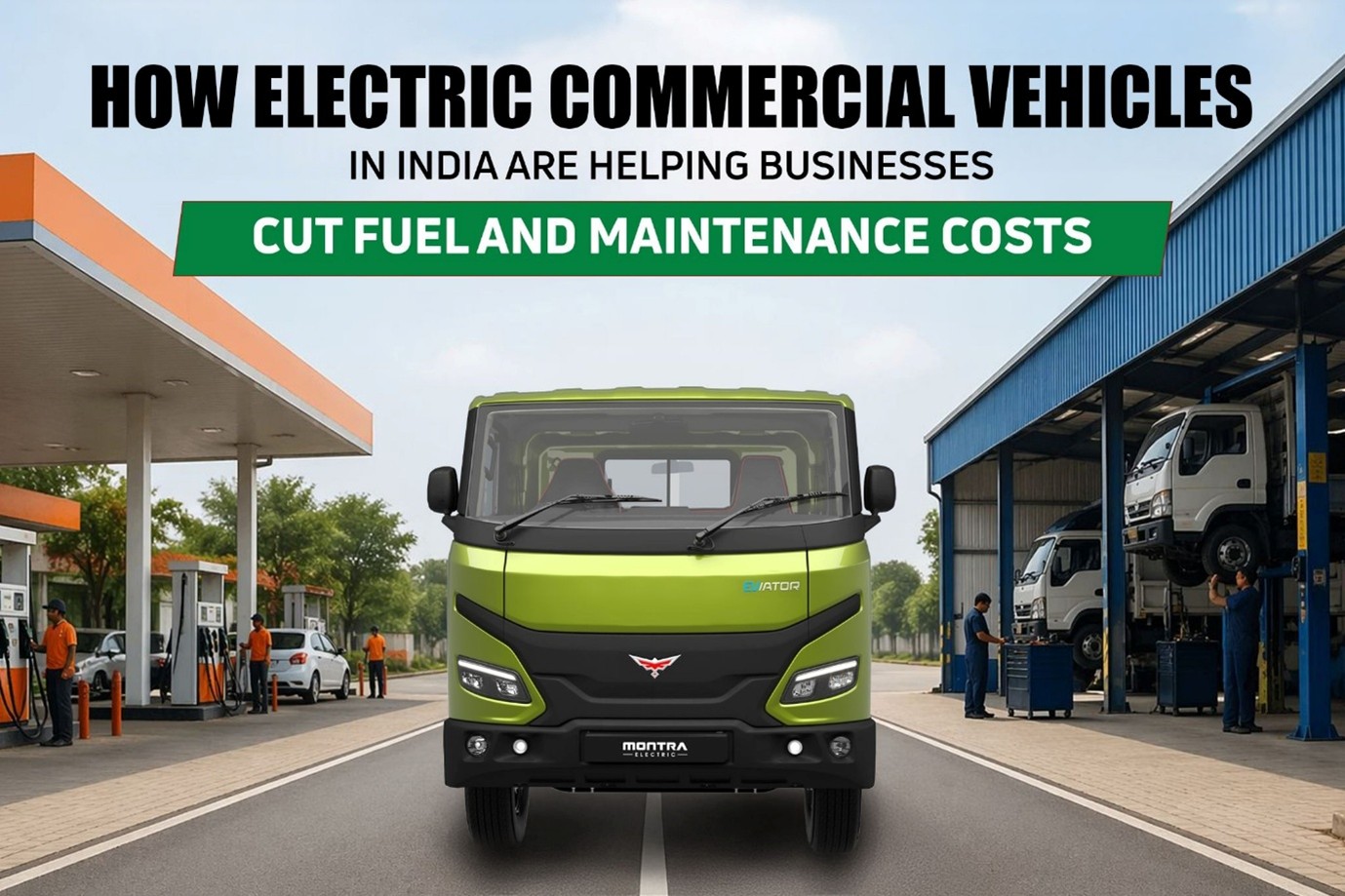
Feature Snippet
By switching to electric small commercial vehicles (SCVs), Indian businesses can save approximately ₹2 lakh to ₹2.5 lakh annually in operational costs. While the initial purchase price is higher than diesel, the significantly lower energy cost (₹1–2/km for EV vs. ₹7–9/km for diesel) and a 50% reduction in maintenance expenses allow fleet operators to reach a break-even point within 18 to 24 months. Over a five-year period, cumulative savings can range between ₹8 lakh and ₹12 lakh per vehicle.
The conversation around electric commercial vehicles in India has changed. It is no longer just about policies, pilot projects, or sustainability. It is now about real business costs. Every rupee spent and saved matters. For fleet operators, especially in last-mile delivery, one question is becoming more important, how fast will the investment pay back and how much cost can it reduce over time.
This is where a small electric commercial vehicle stands out. Not because it is new, but because it works differently in terms of cost. When you look at it over a longer period, the difference becomes clear. Using the Montra Electric Eviator as a benchmark, a 5-year total cost of ownership model shows how EV commercial vehicles in India are slowly doing better than diesel vehicles.
A vehicle rarely costs what its invoice suggests. The real cost unfolds gradually, through fuel, maintenance, downtime and eventual resale. For businesses that depend on daily vehicle utilization, these variables do not stay isolated; they compound.
A comprehensive TCO model includes:
Each element carries weight. Yet, each behaves differently for diesel and electric platforms.
On the surface, an electric SCV seems quite pricey. The expense of batteries causes the purchase cost to rise and this increase becomes clear right away. But this gap has started to close. With incentives, lower GST and changing financial systems for EVs, the total cost approaches that of diesel engines. Monthly EMI payments used to be far greater for EVs, but they've shrunk to just a small difference.
The diesel SCV, in contrast, comes with convenience. It has a low purchase price and conventional financing, yet no underlying structure to cut down costs.
If one variable defines the economics of EV commercial vehicles in India, it is energy cost per kilometre.
Diesel vehicles operate within a narrow efficiency band. Even with careful driving, fuel expenses remain exposed to market volatility. For most SCVs, the cost ranges between ₹7 and ₹9 per km. Over time, this becomes the largest contributor to total ownership cost.
Electric SCVs behave differently. Charging costs remain predictable. Even with variations in tariffs, the cost typically stays between ₹1 and ₹2 per km.
Now consider a vehicle running 120 kilometres daily. The difference is not incremental, it is structural.
The gap widens quickly. Within a single year, savings can cross ₹2 lakh. Over multiple years, this becomes the foundation of TCO advantage.
Maintenance does not always draw immediate attention, yet it steadily influences profitability. Diesel vehicles carry complexity, engine components, lubrication systems, transmission wear, exhaust assemblies. Each requires periodic attention.
Electric vehicles simplify this equation.
As a result, annual maintenance costs reduce significantly. A diesel SCV may require ₹40,000 to ₹60,000 each year. An electric SCV, in comparison, often operates within ₹15,000 to ₹25,000.
The difference may appear modest annually. Over five years, it becomes substantial. More importantly, reduced maintenance improves uptime, something fleet operators value as much as cost savings.
The insurance cost for electric trucks is slightly higher mainly because of the value of batteries. This variation, however, is limited within the overall total cost of ownership.
The important thing is the reliability of the system. Electric vehicles have stable operation, infrequent breakdowns and a consistent maintenance schedule. This helps cut down on indirect expenses, downtime, missed deliveries and emergencies that are not always calculated but affect the company's productivity.
The residual value of diesel trucks has always been quite predictable. However, changing emissions standards and city regulations are gradually affecting that predictability. While previously, the resale of electric SCVs was a problem, it is currently on the rise. There is an increased demand for used electric vehicles, especially those with active batteries.
For example, the Montra Electric Eviator can preserve its residual value due to its active warranty and dependable performance history.
As soon as all the elements of the cost are added up, one can identify a trend. The electric SCV comes with a higher initial cost, which usually ranges between ₹2 to ₹3 lakhs compared to a similar diesel model. But the yearly saving in terms of fuel costs and maintenance expenses usually exceeds ₹2.5 lakhs. Consequently, there is a comparatively fast payback period for the initial investment. Under normal operational circumstances, this payback point is reached after about 18 to 24 months. Beyond this stage, the vehicle is no longer making up for its cost; instead, it makes a profit.
Over a five-year period, the cumulative effect becomes difficult to overlook. Diesel vehicles continue to accumulate fuel and maintenance costs. Electric vehicles, in contrast, stabilize after recovering their initial premium.
The net outcome:
Such savings directly influence fleet profitability, especially in high-utilization environments.
The topic of battery cost is frequently brought up in connection with electric commercial vehicles in India. This is not surprising, but needs to be put into perspective. For one thing, warranty coverages have been enhanced. Most manufacturers now provide warranties on batteries ranging from five to seven years, which covers much of the life of the truck. Secondly, the actual driving conditions for fleets are relatively controlled.
Finally, even when replacement becomes a necessity, it remains economically feasible. The declining cost of batteries, coupled with many years of savings on diesel fuel, makes this a relatively painless transition. In practice, fleet managers recover their total investment in the truck long before such a decision arises.
The Montra Electric Eviator represents a practical application of these economics. It is not designed for theoretical efficiency; it is built for real-world logistics.
Its strengths align with operational needs:
These attributes make it a reliable benchmark within the small electric commercial vehicle segment.
Choosing between diesel and electric SCVs should not rely on assumptions. It should follow operational logic.
A few key considerations help clarify the decision:
When these conditions align, the case for EV commercial vehicles in India becomes compelling.
There is no longer any doubt about the economics of electric commercial vehicles in India. The economics are clear in day-to-day operations, through savings on fuel expenses, reduction in maintenance expenditure and higher efficiency of the fleet. For companies that are serious about managing their costs in the long run, it’s not a question of testing the technology but of timing their investment. Those who take the leap first save earlier; those who delay incur unnecessary expenses. The correct choice of a small electric commercial vehicle like the Montra Electric Eviator is not just a change to electricity from diesel.
FAQ’s
1. What is the per-kilometer running cost of an electric SCV in India?
Electric SCVs run at ₹1–2 per km, versus ₹7–9 per km for diesel. This predictable, lower energy cost is the biggest source of savings.
2. How long does it take to recover the higher initial cost of an EV?
The break-even point comes within 18–24 months. Annual fuel and maintenance savings of over ₹2.5 lakh quickly offset the ₹2–3 lakh price premium.
3. Why is maintenance cheaper for electric commercial vehicles?
EVs have fewer moving parts with no engine oil or clutch. Annual upkeep is around ₹15,000–25,000, against ₹40,000–60,000 for diesel.
4. What happens to the battery after the 5-year ownership period?
Most batteries carry 5–7 year warranties, and replacement costs keep falling. By then, fuel savings have usually recovered the full investment.
5. Does the resale value of electric trucks hold up?
Yes, and it's improving as demand for used electric SCVs rises. Models with active batteries and warranties retain value well.

.svg)


.png)