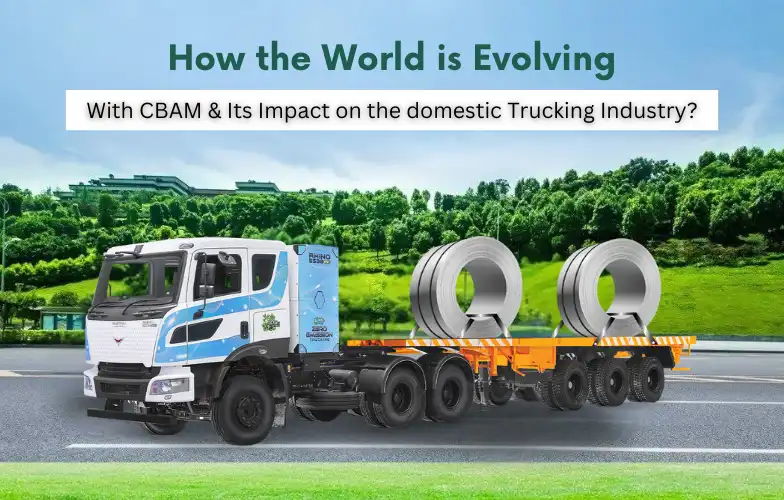
The introduction of the Carbon Border Adjustment Mechanism (CBAM) by the European Union is a groundbreaking move with profound implications for the global trucking industry. As nations and businesses align themselves with the urgent need to combat climate change, CBAM is set to redefine international trade and manufacturing practices, particularly in sectors with high carbon footprints such as trucking. At the forefront of this revolution, companies like IPLTech Electric are pioneering the change, with India's first pure electric truck, the Rhino 5536E, leading the charge toward a sustainable future.
CBAM is not merely a regional policy but a global signal — a call to action for industries worldwide to ramp up their environmental strategies. It seeks to put a price on carbon emissions associated with goods imported into the EU, effectively extending the EU's carbon pricing policies beyond its borders. The message is clear: align with our environmental standards or face a financial barrier to one of the world's largest markets.
Trucking stands at the heart of global trade, responsible for the movement of goods across continents. With CBAM, truck manufacturers outside the EU are now compelled to assess and adapt their production methods to mitigate carbon emissions. This means re-engineering production lines, adopting clean energy sources, and potentially reshaping the entire logistics chain to reduce the carbon footprint.
From 2023, non-EU manufacturers will be required to report emissions, setting the stage for a full-scale implementation in 2026 when CBAM certificates become mandatory. The cost of non-compliance could be significant, potentially changing the cost-benefit analysis of manufacturing locations and supply chains. The trucking industry must weigh these costs against the investments needed to transition to greener technologies, such as electric trucks, which could offer a long-term competitive advantage.
As the trucking industry confronts the reality of CBAM, electrification becomes not just a sustainable choice, but an economic necessity. Electric trucks offer the potential to drastically reduce Scope 3 emissions—those indirect emissions that are not produced by the company itself but are a result of its value chain, including the use of the sold products. This shift towards electric vehicles (EVs) in the trucking sector could significantly lower the industry's overall carbon footprint, aligning with CBAM's objectives and future-proofing businesses against rising carbon costs.
CBAM is expected to inspire similar policies worldwide, creating a domino effect as countries seek to prevent carbon leakage and ensure their industries are not disadvantaged. This global policy shift will likely accelerate the adoption of clean technologies in the trucking industry, driving innovation and efficiency improvements.
Amidst this global shift, IPLTech Electric's Rhino 5536E stands out as India's first pure electric heavy commercial vehicle. It's a beacon of innovation, designed to drastically cut down Scope 3 emissions—those indirect emissions that occur in the value chain of the reporting company, including the use of the sold products. By integrating cutting-edge technology and sustainable practices, IPLTech Electric's Rhino 5536E is not just meeting but exceeding the environmental benchmarks set by CBAM.
The world is indeed evolving with the introduction of CBAM, and its global impact on the trucking industry is undeniable. As countries and companies adapt to this new carbon-conscious landscape, we are likely to witness a significant transformation in how goods are manufactured and transported. CBAM has set the stage for a greener, more sustainable future, and the trucking industry is at the forefront of this change, evolving to meet the dual demands of environmental responsibility and economic vitality

.svg)


.png)