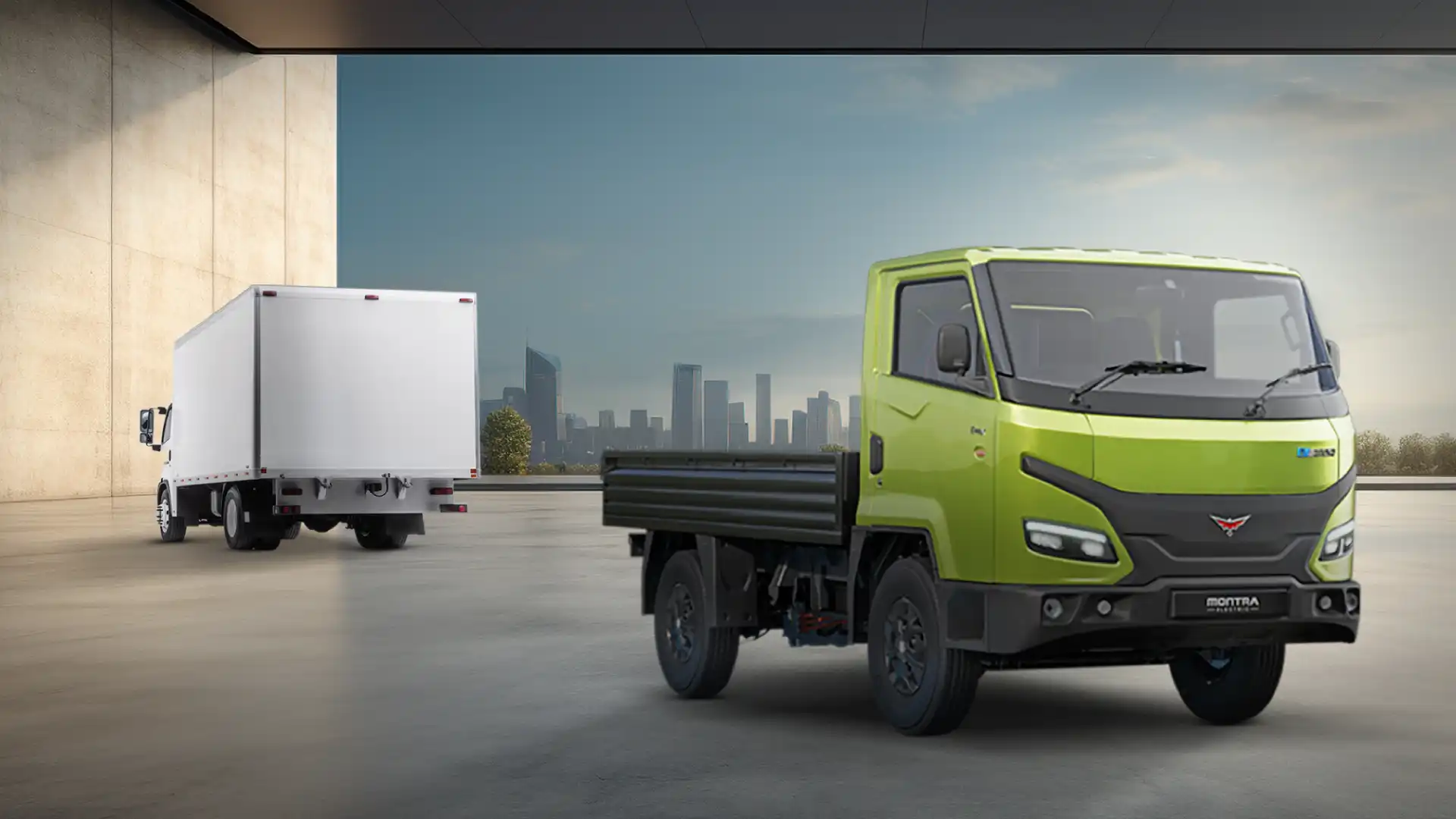
Electric commercial vehicles are a practical, high-value choice for many small fleets and businesses. When you compare electric small commercial vehicles with diesel options on the market, the electric option increasingly comes out ahead. On the metrics that matter to operators - total cost of ownership (TCO), uptime, driver productivity, environmental impact, and future regulatory risk - electric small commercial vehicles such as Montra Electric’s Eviator are the smarter investment for most intracity and intercity operations.
For dense urban routes and predictable daily cycles, small electric commercial vehicles offer lower operating costs per kilometer, simplified maintenance, quieter and safer driving conditions, and a lower emissions footprint. These advantages compound, as the predictability of energy costs and higher uptime mean more revenue hours per vehicle. When fleet owners model a realistic 3–5 year TCO, the electric case is often stronger even if the upfront price of an electric small commercial vehicle is slightly higher.
TCO is where the electric advantage becomes clear. Consider the main cost buckets:
When you add up lower energy expenses, fewer consumables, and higher utilization, a modestly higher upfront cost is quickly offset—often within 18–36 months for urban usage patterns, based on product fleet trials and customer case studies.
The convenience of refueling with diesel or CNG is undeniable. However, the volatility of diesel prices and the blending of fuels creates planning risk. Electricity enables cost predictability. With a central depot, charging overnight or during low-tariff windows makes per-km energy cost forecastable. For fleets that can install a charger, pairing with solar drastically reduces operating expense and shortens the payback window. Even where on-site solar isn’t possible, many utilities offer stable commercial EV tariffs that are cheaper than diesel on a per-km basis for typical urban duty cycles.
A common misconception is that EV commercial vehicles trade payload or performance for economy. Today’s small electric commercial vehicles are engineered to maintain competitive payloads while delivering instant torque that helps in stop-start city driving. The quieter cabin and reduced vibration in SCVs such as Montra Electric Eviator improves driver comfort and reduces fatigue, improving working conditions that can translate to better employee satisfaction and increased productivity. For delivery businesses, smoother acceleration and precise low-speed control mean faster, safer customer interactions and fewer damaged goods.
Switching to electric commercial vehicles can bring about tangible reductions in local air pollution and noise. For customer-facing businesses, an electric fleet communicates modernity and responsibility, strengthening brand equity. As cities begin to focus more on improving the local environment and amid the growing potential of tighter environmental regulations, electric fleets are better positioned to avoid future penalties or restrictions.
Financing options tailored to electric commercial vehicles are increasingly available, with up to 95% financing offered (terms and conditions apply). Government incentives, municipal schemes, and concessional loans for commercial electrification further improve economics. Importantly, well-structured warranties and service contracts, such as those provided by Montra Electric, reduce long-term risk.
Smart fleet owners pilot a small number of electric commercial vehicles on representative routes, monitor real telematics and cost data, and then scale. This approach minimizes risk and provides a factual basis for further investment. Use pilot learnings to refine charging schedules, driver training, and maintenance planning to take full advantage of your EV fleet's capability. You can always connect with Montra Electric to learn more about how our solutions have helped clients make the commercial EV transition.
Electric commercial vehicles deliver superior economics, reduced operational complexity, improved driver well-being, and lower environmental impact for many small fleets. The decisive factors are route profile, charging access, and the ability to leverage predictable energy pricing. For urban delivery, service fleets, and intra-city logistics, the electric choice is increasingly the better investment, offering a more stable, productive, and future-proof fleet model than diesel alternatives.
Ready to experience the Eviator difference? Enquire now to test drive Montra Electric’s small commercial vehicle and calculate your business savings.
1. Are small electric commercial vehicles really more cost-effective than diesel vehicles?
Yes. When evaluated on total cost of ownership (TCO), small electric commercial vehicles typically outperform diesel vehicles by helping the customers to save 17.5* lakhs in 7 years due to lower energy costs per km, reduced maintenance expenses, and higher vehicle uptime. For urban usage, the higher upfront cost is often recovered within 18–36 months. *T&C Apply
2. How does the running cost of an electric commercial vehicle compare to diesel?
Electricity is significantly cheaper and more price-stable than diesel on a per-kilometre basis at just Rs. 2.35 per km. Charging at depots during off-peak hours or using solar power further reduces costs, making electric commercial vehicles more predictable and economical to operate over time.
3. What kind of maintenance savings can fleets expect with electric commercial vehicles?
Electric commercial vehicles require no engine oil changes, fewer filters, and minimal drivetrain servicing. Regenerative braking reduces brake wear, and fewer moving parts lower the risk of breakdowns, resulting in lower service bills and reduced downtime.
4. Do electric commercial vehicles compromise on payload or performance?
No. Modern small electric commercial vehicles are engineered to deliver competitive payload capacities along with instant torque, which is especially beneficial for stop-and-go city driving. Performance remains strong even under load, with smoother acceleration and better low-speed control.
5. How does charging impact daily operations for electric commercial fleets?
Charging is easiest when aligned with business operations. Overnight depot charging, short opportunity top-ups during breaks, and optional solar integration ensure vehicles start the day fully charged and maintain uptime without disrupting delivery schedules.
6. Are electric commercial vehicles a safer long-term investment considering regulations?
Yes. Electric fleets are future-proof against tightening emissions norms and urban access restrictions. As cities push for cleaner transport, electric commercial vehicles reduce regulatory risk while helping businesses avoid penalties and operational limitations.
7. Is switching to an electric commercial fleet suitable for small businesses?
Electric commercial vehicles are ideal for small businesses that operate intracity or intercity routes with daily depot returns, prioritise predictable costs, and value reliability. A phased approach, pilot, measure, and scale, helps businesses transition with minimal risk.

.svg)


.png)