


12 Mar, 2026 | Electric Three Wheelers
5 Reasons Businesses Are Switching to Electric 3-Wheelers in 2026
By Montra Electric

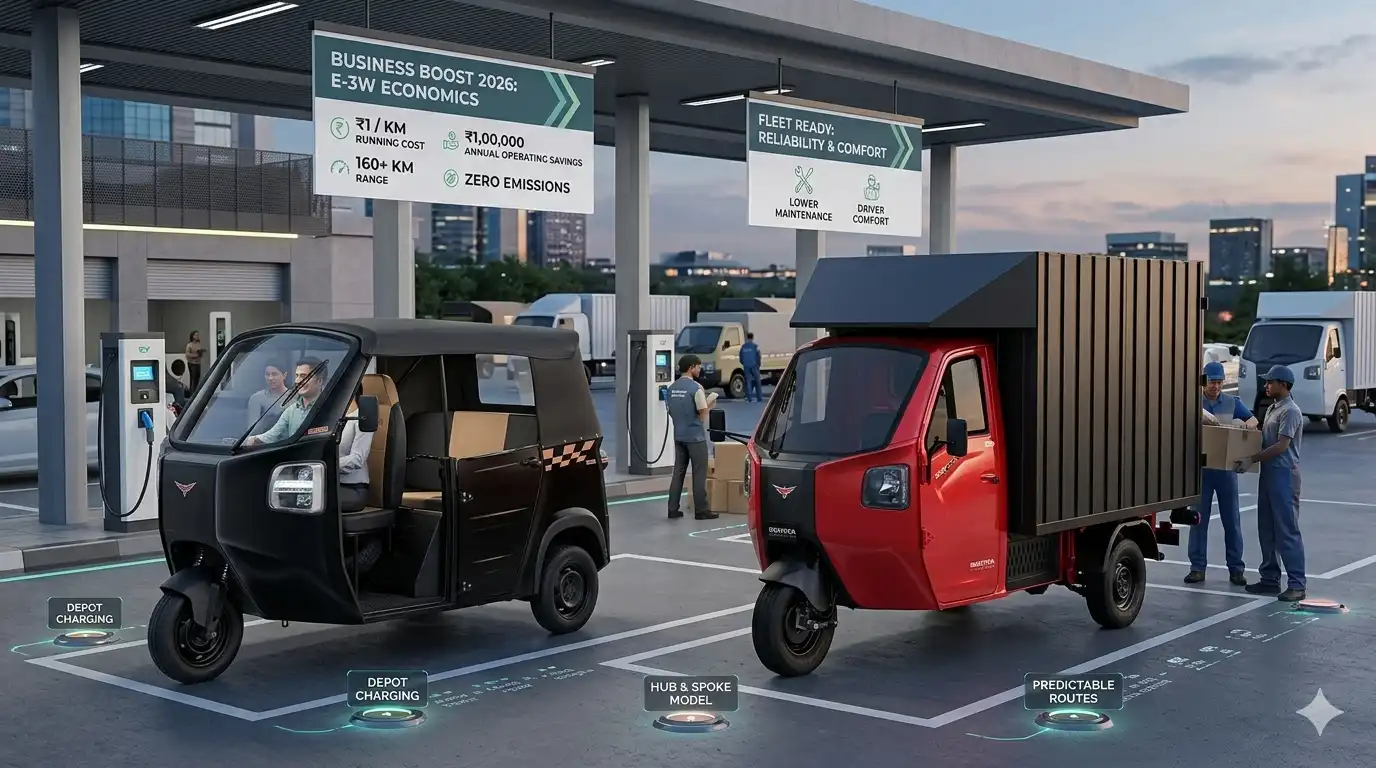
5 Reasons Businesses Are Switching to Electric 3-Wheelers in 2026
Businesses are increasingly switching to electric 3-wheelers in 2026 as the economics now strongly favor EVs. With per-kilometer costs under ₹1 and improved efficiency, new-age electric three-wheelers like the Montra Electric Super Auto and others offer over 160 km of real-world range, lower maintenance, and enhanced driver comfort, making them a practical and cost-effective alternative to traditional CNG or diesel vehicles.
Reasons Businesses Are Switching to Electric 3-Wheelers in 2026
The Montra Electric Super Auto and Super Cargo allow fleet operators and drivers to set a new course for their businesses. At the same time, using the Montra Electric products can save owners up to ₹80,000 - ₹1,00,000 per year in operating costs. Fleet operators must economically achieve survival and growth in a low-margin industry like the last-mile connectivity sector. Here are 5 specific reasons why the shift to electric is occurring today.
1. The "Per Kilometer" Math is Unbeatable
Let’s start with the wallet, because that’s where the decision is made. Running a CNG auto costs roughly ₹3 to ₹4 per kilometer. Running a diesel one is even higher.
The Montra Electric Super Auto, with its efficient PMSM motor and large battery, brings that cost down to approximately 50 paise to 70 paise per kilometer. Over a daily run of 120 km, a driver saves nearly ₹350 every single day. Multiply that by 25 working days and you have an extra ₹8,750 in monthly income. For a business running a fleet of 10 delivery vehicles, that’s nearly ₹1 Lakh a month in straight profit just from fuel savings.
2. Range Anxiety is Dead (160km+ Real World)
Two years ago, the excuse was "It won't run all day." That excuse is gone. Modern electric 3-wheelers have cracked the range code.
The Montra Electric Super Auto boasts a certified range of nearly 200 km + and a real-world range that comfortably exceeds 160 km on a single charge. This covers the entire daily shift of almost any commercial driver, including the morning school run, the office rush and the evening market trips.
3. Reliability and Lower Downtime
Logistics companies hate downtime. A broken-down vehicle is a lost customer. Diesel and CNG engines vibrate. They shake themselves apart. They need oil changes, filter changes, clutch plate replacements and constant tuning.
Electric vehicles are incredibly simple, for example the Montra Electric Super Cargo has minimal moving parts. No conventional gearbox, no engine oil and no spark plugs means that these vehicles need less maintenance and spend less time in a workshop. They spend more time on the road making money for their owners. These three-wheelers also use "boron steel chassis", IP67 rated battery packs and therefore will withstand Indian monsoon seasons and large potholes with less worry than one would normally have with any type of EV.
4. Driver Comfort = Driver Retention
The current situation in India is one of a severe shortage of drivers, with gig workers coming to prefer roles that put less strain on their bodies while they work. It is exhausting to work as a driver using a diesel auto for up to ten hours per day on poor roads, subjecting them to vibration and high noise levels, which leads to back pain and fatigue.
The Montra Electric Super Auto has a completely different driving experience, its cabin is completely quiet, its engine does not produce any vibrations and there is ample legroom available in "super drive mode", making it much easier for the driver to overtake other vehicles. According to fleet owners, giving a driver an electric vehicle (EV) makes them a much happier, less fatigued person and therefore, less likely to leave their employment. Fleet owners are now beginning to offer EVs as part of their driver recruitment strategy for the future (2026).
5. Future-Proofing Against Bans and Policy Shifts
Finally, smart businesses are reading the writing on the wall. Indian cities are choking. Pollution norms are only going to get stricter. We are already seeing "Zero Emission Zones" being discussed for city centers.
Investing in a new CNG fleet today is a risk. What if CNG prices spike (as they have)? What if ICE are restricted in certain zones? Buying a Montra Electric vehicle is an insurance policy. It is compliant with every foreseeable regulation.
Conclusion
The tipping point has passed. The technology in vehicles like the Montra Electric Super Auto has matured to a point where it is simply a better product than its fossil-fuel predecessor. Businesses switching in 2026 aren't early adopters taking a risk; they are the smart money moving to a more profitable platform.
Frequently Asked Questions
1. Why are businesses switching from diesel and CNG to electric 3-wheelers in 2026?
Businesses are switching because electric 3-wheelers offer significantly lower operating costs, higher reliability, and better long-term profitability. With per-kilometer running costs as low as 50–70 paise, electric models like the Montra Electric Super Auto deliver immediate financial advantages in a low-margin industry.
2. Is the real-world range of electric 3-wheelers sufficient for daily operations?
Yes. Modern electric 3-wheelers now provide real-world ranges of over 160 km on a single charge. This comfortably covers a full day of commercial use, including multiple delivery trips and peak-hour passenger runs, eliminating range anxiety.
3. How do electric 3-wheelers reduce maintenance and downtime?
Electric 3-wheelers have far fewer moving parts than diesel or CNG vehicles. With no engine oil, clutch, or complex gearbox, vehicles like the Montra Electric Super Cargo require less servicing, experience fewer breakdowns, and spend more time on the road generating revenue.
4. Do electric 3-wheelers improve driver comfort and retention?
Yes. Electric 3-wheelers offer a quieter, vibration-free driving experience that significantly reduces driver fatigue. Improved comfort and ease of driving help fleet operators retain drivers in a highly competitive labor market.
5. Are electric 3-wheelers a safer investment considering future regulations?
Electric 3-wheelers are fully compliant with current and anticipated emission regulations. With stricter pollution norms, potential zero-emission zones, and ongoing government incentives, electric vehicles provide long-term regulatory security and faster return on investment.
Related Blogs

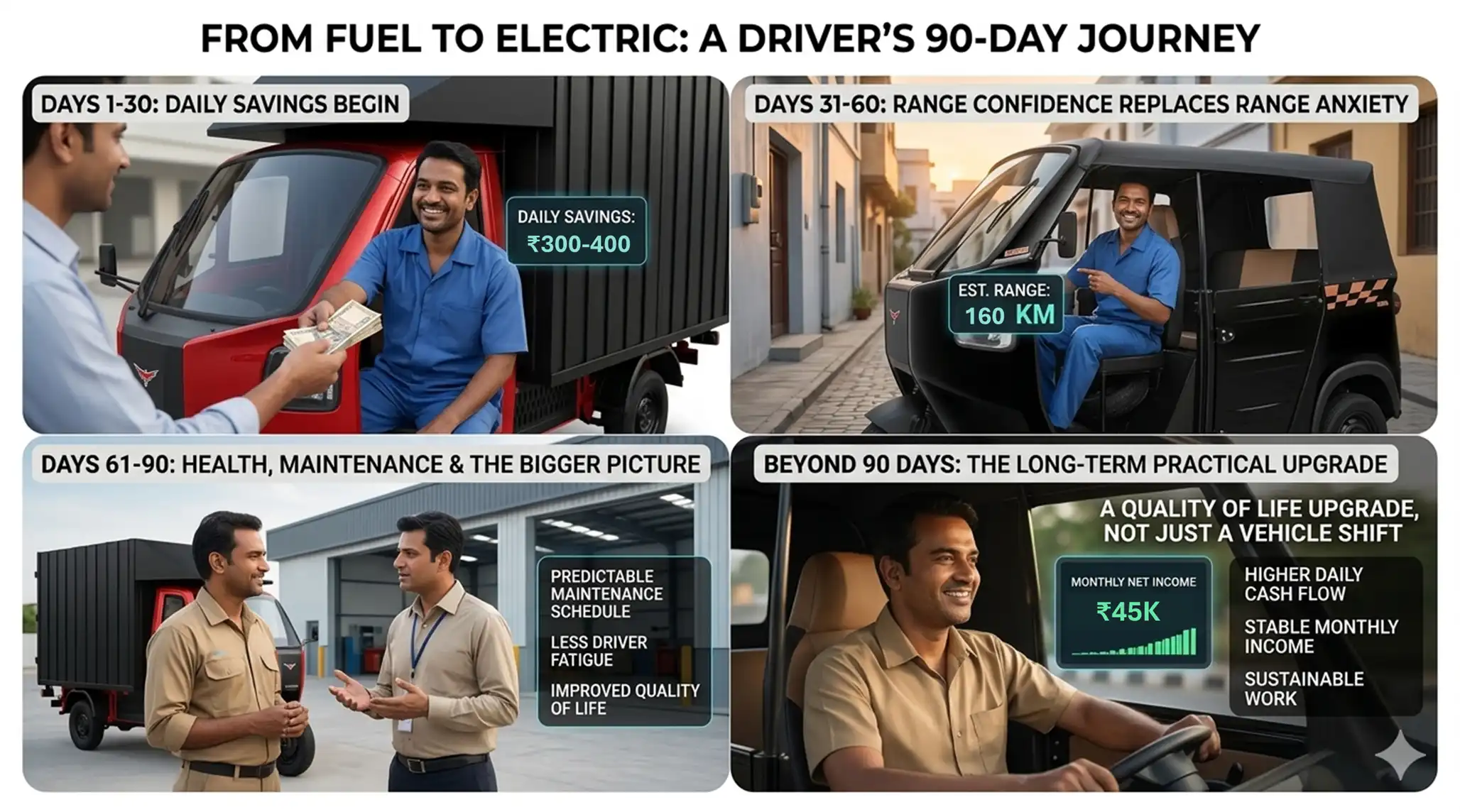
16 March, 2026 | Blog
From Fuel to Electric: What Changes for a Last-Mile Driver in the First 90 Days?
The first 90 days after switching to an electric auto reveal real changes for last-mile drivers. Lower daily energy costs, reduced physical fatigue, predictable maintenance and quieter workdays gradually replace fuel stress, making electric mobility a practical upgrade rather than just a technology shift.
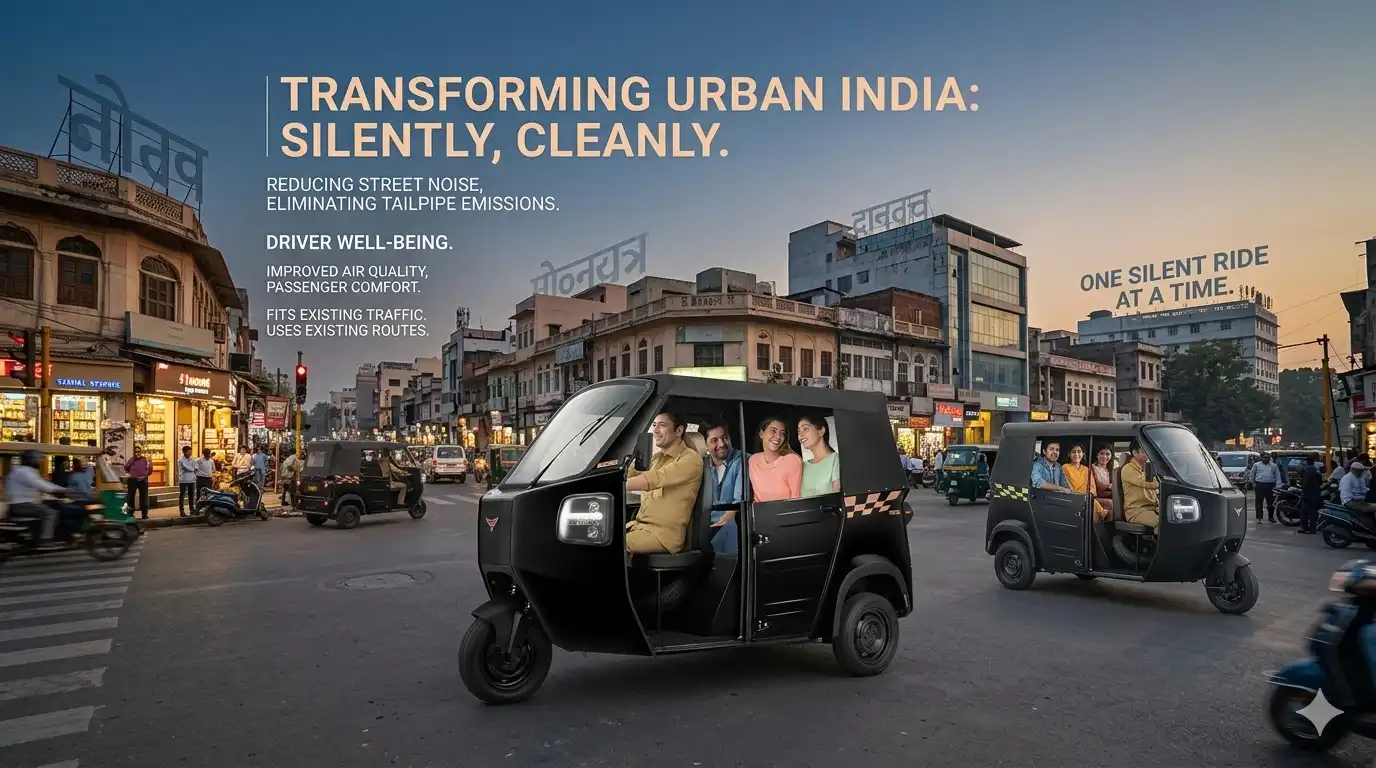
12 March, 2026 | Blog
How Electric Autos Are Reducing Noise & Pollution in High-Density Indian Cities
Electric autos are transforming Indian cities by reducing street-level noise and eliminating tailpipe emissions. Unlike conventional auto-rickshaws, they operate silently in traffic and release no harmful exhaust, improving air quality, passenger comfort, and driver well-being in high-density urban areas.

Follow us on:


Service: 1800-833-3303
Sales: 1800-833-3301
Mail: customercare@montraelectric.com
Exports: exports@montraelectric.com
Grievance: ethics@ticm.murugappa.com