Being one of the most energy-intensive industries in the world, the steel industry is continuously adopting advanced technologies that help minimize environmental pollution while improving efficiency.
With rising international concern for sustainability, many steel companies are actively working to reduce their carbon footprint in line with ESG standards.
Transportation is a critical component of the steel supply chain and contributes significantly to greenhouse gas emissions and operational expenses.
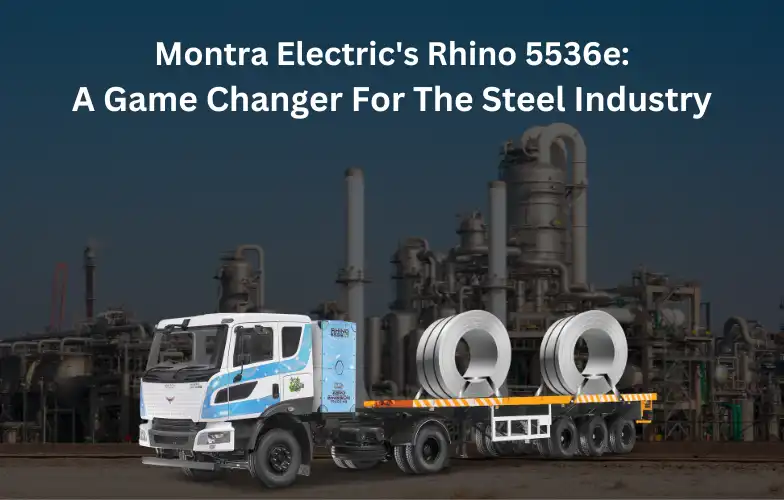
To address these challenges, the steel industry is turning to sustainable solutions such as Montra Electric’s Rhino 5538e, built for heavy industrial applications.
The steel industry is traditionally associated with high energy consumption, with transportation being a major contributor to environmental impact.
Diesel trucks used for transporting iron ore, coal, and finished steel products generate high greenhouse gas emissions and incur high fuel costs.
Electric trucks provide a sustainable alternative by significantly reducing carbon emissions, lowering operating costs, and reducing dependence on fossil fuels.
For the steel industry, adopting Montra Electric trucks supports ESG compliance while improving operational efficiency.
The Rhino 5538e is designed to handle rough terrains and heavy loads common in steel industry operations.
Whether transporting raw materials like iron ore or delivering finished steel products, the truck’s powerful electric motor ensures reliable and consistent performance.
Featuring a fully electric drivetrain, the Rhino 5538e delivers maximum power with minimal energy loss.
This high energy efficiency directly results in lower operational costs and a reduced environmental footprint.
Operating electric trucks in India is up to 70% cheaper than diesel-powered trucks.
Diesel trucks cost approximately ₹35–40 per km, whereas the Rhino 5538e operates at around ₹7–8 per km.
Electric energy costs are more stable, enabling steel companies to better forecast and manage long-term logistics expenses.
With fewer moving parts than diesel trucks, the Rhino 5538e requires less maintenance, resulting in reduced operating costs and increased vehicle uptime.
Reduced breakdowns and longer service intervals improve fleet reliability and logistics efficiency.
Driver feedback highlights the truck’s immense power of 360 HP, offering strong pickup and effortless hauling even under heavy loads.
Electric trucks significantly reduce greenhouse gas emissions, helping steel companies meet ESG targets.
Adoption of Montra Electric trucks can also generate carbon credits, providing an additional revenue stream and improving overall profitability.
Sustainability is becoming a strategic priority in steel logistics, and electric trucks like the Rhino 5538e play a vital role in achieving greener operations.
Advancements in battery technology and charging infrastructure are further enhancing the viability of electric logistics in the steel industry.
The future of industrial transportation is electric, with the steel industry already making significant progress toward decarbonization.
Companies such as Tata Steel, Tata Bhushan Steel, APL Apollo, and Hindustan Zinc are early adopters of electric trucks for inbound and outbound steel logistics.
Compared to alternative fuels like CNG, LNG, and biodiesel, electric trucks offer superior advantages due to local energy availability and ease of adoption.
Electric trucks are also the only transport solution delivering net-zero tailpipe emissions.
By adopting vehicles like the Rhino 5538e, steel companies enhance sustainability while improving efficiency and profitability.
In pursuit of innovation and sustainable operations, the steel industry is increasingly adopting Montra Electric trucks.
The Rhino 5538e delivers a powerful, cost-effective, and environmentally friendly logistics solution.
With lower running costs, higher uptime, and strong ESG alignment, electric trucks represent the future of steel industry logistics.

.svg)


.png)