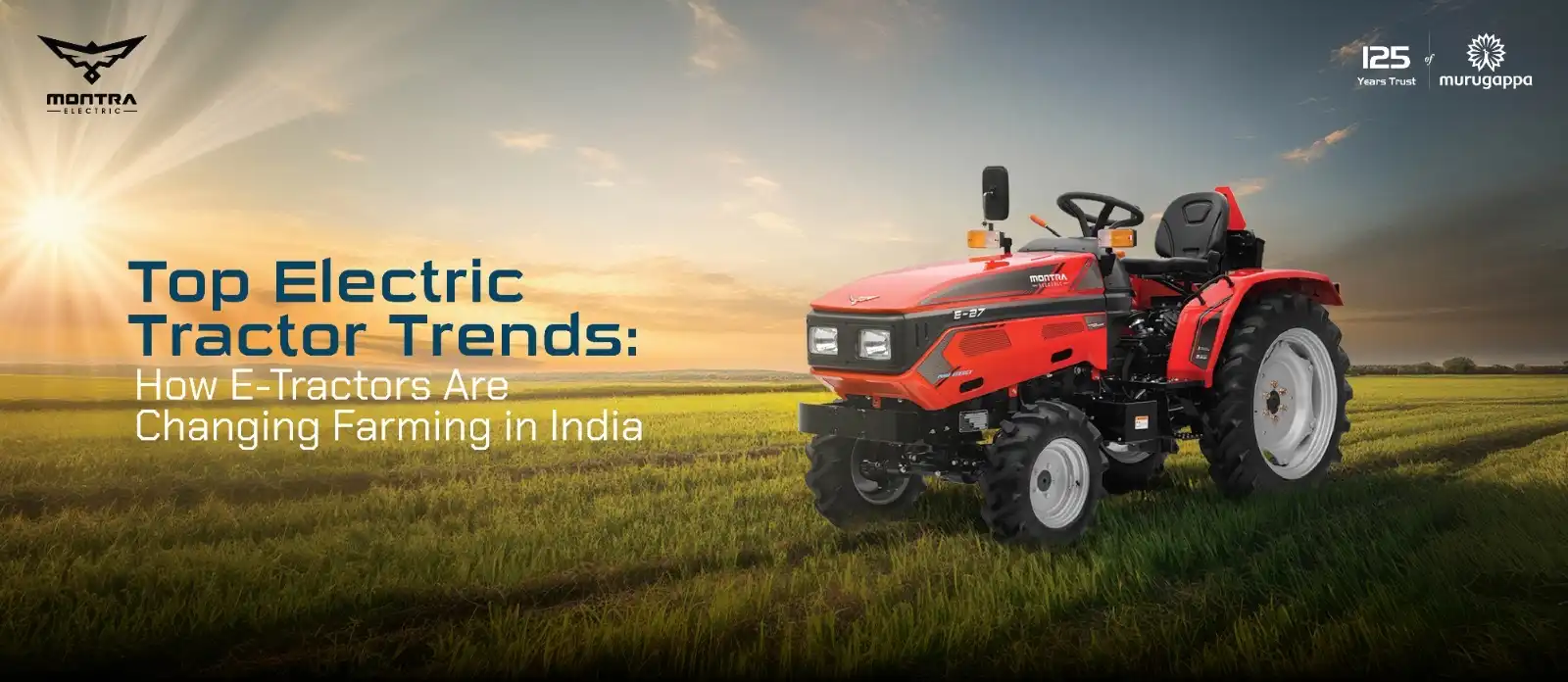
Electric tractors are fast emerging as practical tools that can change farming economics, reduce emissions, and improve on-field comfort. Drawing on the design and product principles used by leading electric vehicle manufacturers like Montra Electric here’s how we think current electric tractor trends are moving forward.
Several structural factors make India fertile ground for the electric tractor revolution. Diesel price volatility and the high cost of fuel-driven operation have pushed farmers to look for predictable, lower-cost alternatives. At the same time, improving battery economics and falling battery prices are narrowing the gap between the e tractor price and diesel counterparts on a total cost of ownership basis.
Beyond cost, electric tractors bring lower vibration, quieter operation, and instant torque - advantages that matter in orchards, horticulture, and close-quarters farm operations. By leveraging e-tractors like Montra Electric’s E-27, smallholder and medium-scale farms can tap into higher productivity, lower health risks, and less maintenance downtime.
Modern electric commercial vehicles have taught valuable lessons that transfer directly to agricultural machinery. Durable, full-metal frames and reinforced chassis increase structural life and reduce repair frequency in tough field conditions. IP-rated electrical enclosures protect sensitive components from dust and splash during monsoon operations. Integrated tracking and intuitive dashboards provide battery state-of-charge (SOC) monitoring, preventive maintenance alerts, and utilisation analytics - turning a tractor into a connected asset rather than a standalone machine.
When evaluating an electric tractor, give weight to these design features: a rugged chassis, sealed electrical housings, and a basic digital screen that displays charge, location, and health diagnostics.
The tractor battery is the most critical component in determining an e-tractor’s usefulness. Modern lithium-ion chemistries offer higher usable capacity, better cycle life, and improved thermal stability compared with legacy lead-acid systems. But farm duty cycles are heavy: ploughing and tilling draw sustained high torque, while pumping and trailer work can mean long continuous loads.
Instead of chasing headline range numbers, assess the tractor’s usable energy, continuous power ratings, and thermal management. Successful deployments pair an appropriately sized battery with operational planning: scheduling intensive field tasks during cooler parts of the day, leveraging opportunity charging between jobs, or using a hybrid approach (small range-extender genset) where continuous heavy-duty work is expected.
Farm electric tractor charging needs differ from urban EV charging. Rather than relying on public fast chargers, the most practical models are:
Understand your electric tractor’s charging time and realistic top-up times for your workflow. A practical e-tractor that charges in a few hours can be integrated into daily farm rhythms while one that needs long, repeated deep charges may be less convenient.
Upfront e tractor price may be higher than a conventional diesel unit, but the long-term maths often favours electrification. Key cost levers include:
After-sales support is as important as technical specs. A clear electric tractor battery warranty with capacity-retention guarantees, accessible service centres, and a steady spare parts supply reduce risk and protect resale value. Manufacturers such as Montra Electric that offer preventive maintenance and quick service response times for their products like the E-27 electric tractor make the ownership experience significantly better.
For e-tractors to scale across India, stakeholders across the industry must align. Not only must electric tractors be promoted, but support through government subsidies, charging infrastructure, financing for farmers large and small, and products that meet Indian farming conditions must all come together to usher in an electric farming revolution.
1. Why are electric tractors gaining popularity among Indian farmers?
Electric tractors are gaining traction due to rising diesel prices, lower operating costs, quieter operation, and reduced maintenance. Predictable electricity expenses and improving battery technology make e-tractors a practical alternative for many Indian farming conditions.
2. Are electric tractors suitable for daily farm work in India?
Yes. Modern electric tractors are well-suited for tasks like cultivation, orchard work, hauling, pumping, and light-to-medium field operations. With instant torque and smooth power delivery, they perform efficiently in real-world farm applications.
3. How far can an electric tractor operate on a single charge?
Practical range depends on battery capacity, workload, and terrain. Rather than focusing on distance, farmers should assess usable energy, continuous power output, and task duration. Many e-tractors comfortably support a full work shift with planned charging.
4. What are the best charging options for electric tractors on farms?
The most effective strategies include overnight on-farm charging, solar-assisted charging, and opportunity charging between tasks. These methods integrate easily into daily farm routines without relying on public charging infrastructure.
5. Is the higher electric tractor price justified in the long run?
Yes. While upfront costs may be higher, electric tractors offer significant long-term savings through lower fuel expenses, reduced maintenance, and minimal downtime—resulting in a lower total cost of ownership (TCO) over time.
6. What role do battery warranties and service support play in e-tractor adoption?
Battery warranty coverage, capacity-retention guarantees, and access to local service centres are critical. Strong after-sales support ensures reliability, protects resale value, and gives farmers confidence in transitioning to electric tractors.
7. Which farming applications benefit most from electric tractors today?
Electric tractors are ideal for orchards, horticulture, irrigation work, estate management, and municipal operations, where predictable duty cycles, low noise, and zero tailpipe emissions offer clear operational advantages.

.svg)


.png)