


16 Aug, 2025 | Urban Transport
The Rise of Electric Autos in India: How E Auto Rickshaws Are Transforming Urban Transport
By Montra Electric Team

Feature Snippets
Electric mobility is no longer a future promise in India—it’s happening on the streets today. The electric auto rickshaw has moved from pilot projects to mainstream use, reshaping last-mile connectivity, driver livelihoods, and urban air quality. In this article, we explore why E auto rickshaws are gaining ground, how they cut costs, and what buyers and fleet owners should watch for when choosing an electric auto or electric three-wheeler.
Table of Contents:
- Why Electric Auto Rickshaws Are Gaining Speed in Indian Cities
- Economics of E-auto Rickshaw: Running Cost, TCO, and Driver Earnings
- Batteries & Range: What Owners Need to Know
- E-Auto Rickshaw Charging Models That Work for Last-Mile Operators
- Safety, Durability, and Build Quality: Why They Matter for Fleet Uptime
- Digital Tools & Apps: Increasing Utilization and Profits
- Policy, Incentives, and Market Trends
- How to Choose the Right E-Auto Rickshaw: Quick Buyer Checklist
- Conclusion: Electric Auto Rickshaws are here to stay
Why Electric Auto Rickshaws Are Gaining Speed in Indian Cities
Three immediate forces explain the surge of the e-auto rickshaw: affordability in operation, suitability for short last-mile connectivity trips, and supportive ecosystem growth. For daily commuters and passengers, electric auto rickshaws deliver quieter rides with less vibration and improved acceleration in stop-start traffic. For drivers and fleet owners, predictable energy costs and lower routine maintenance make the business case compelling.
Beyond the economics, municipal policy nudges and better financing options have reduced the barrier to entry. Charging choices—from home chargers to public points and potential battery swap solutions—now cover most urban use cases, making electric auto rickshaw charging time and range manageable in daily routines.
Economics of E-auto Rickshaw: Running Cost, TCO, and Driver Earnings
The headline for most buyers is the total cost of ownership (TCO). While an e-auto rickshaw price might be comparable to or slightly higher than an older petrol/CNG auto, running costs tell the bigger story. Electricity per kilometer tends to be cheaper and more stable than liquid fuels. Regenerative braking reduces brake wear and overall maintenance needs. As time progresses, many operators find the TCO of an electric three-wheeler lower than its ICE counterpart.
Driver earnings may also increase as the combination of zero fuel costs, cheaper electricity, and longer range, coupled with fast charging, means more kilometers on the road. Fleet owners who track utilization via apps can optimize routes, reduce idle time, and schedule chargers during off-peak tariffs—all of which improve margins.
Batteries & Range: What Owners Need to Know
Battery technology is central to the e-auto rickshaw story and there is real innovation happening there. For example, Montra Electric Super Auto and Super Cargo offer a better battery life cycle and thermal stability than other options. However, it is still important to care for your e-auto rickshaw battery by keeping charge cycles between recommended ranges, avoiding running your battery to the last percentage, and following the recommended charging protocol. All of these measures will extend battery life and protect resale value.

Owners should evaluate the e-auto rickshaw battery specs, warranty terms, and replacement costs. Real-world range depends on payload, driving style, terrain, and ambient temperature - but for many urban routes a single full charge easily covers a day of last-mile trips.
E-Auto Rickshaw Charging Models That Work for Last-Mile Operators
Successful operation of an electric auto rickshaw fleet demands a practical approach to electric auto charging. Here’s what potential charging approaches are:
- Overnight depot or home charging: A full charge before the morning peak covers the highest demand hours.
- Shift-change top-ups: Quick charging during driver breaks or lunch windows adds useful range without disrupting service.
- Opportunity charging: Short bursts while waiting at stands or during unloading keep vehicles moving.
Understanding the E-Auto Rickshaw charging time for your chosen model helps shape schedules. A vehicle that charges fully in 3-4 hours can be rotated effectively across shifts; models offering faster top-ups give even more flexibility.
Safety, Durability, and Build Quality: Why They Matter for Fleet Uptime
Commercial three-wheelers undergo tough daily use. Robust chassis design, protected wiring, and weather-resistant enclosures reduce unscheduled downtime and repair costs. When comparing models, prioritize build quality and proven service networks over the cheapest upfront price. A durable electric auto keeps the meter running; poor quality components do the opposite.
Durability is also a safety feature. Solid frames, good fit-and-finish, and effective ingress protection prevent small incidents (dust, rain, bumps) from cascading into costly workshop visits.
Digital Tools & Apps: Increasing Utilization and Profits
Connectivity turns simple vehicles into managed assets. Companion apps and telematics give owners visibility into state of charge, route efficiency, idle time, and basic diagnostics. For fleets, this data supports preventive maintenance, fair driver benchmarking, and optimized charging windows. Even small insights—like which route produces the most trips per hour—compound into higher daily trip counts and better earnings.
Policy, Incentives, and Market Trends
Government incentives and local schemes have helped scale adoption, particularly for last-mile vehicles. Buyers should check current central and state subsidies, concessional tariffs for depot charging, and any local parking or operating incentives. Policy shifts continue to shape the market; a clear TCO model that reflects available incentives is essential for accurate decision-making.
How to Choose the Right E-Auto Rickshaw: Quick Buyer Checklist
- Range & charging: Does a full charge cover your longest daily route with a buffer? Check your e-auto rickshaw’s charging time.
- Battery warranty & replacement costs: Understand coverage to manage your battery lifecycle.
- Build quality: Prefer a sturdy chassis and protected electricals.
- After-sales network: Make sure service centers and parts are accessible - something you won’t have to worry about with Montra Electric.
- Comfort & ergonomics: Driver comfort translates to more trips and fewer breaks.
- Connectivity: A basic app or telematics helps manage uptime and earnings.
- TCO clarity: Demand a 3-5-year TCO worksheet from the dealer, including energy, maintenance, insurance, and resale assumptions.
Conclusion: Electric Auto Rickshaws are here to stay
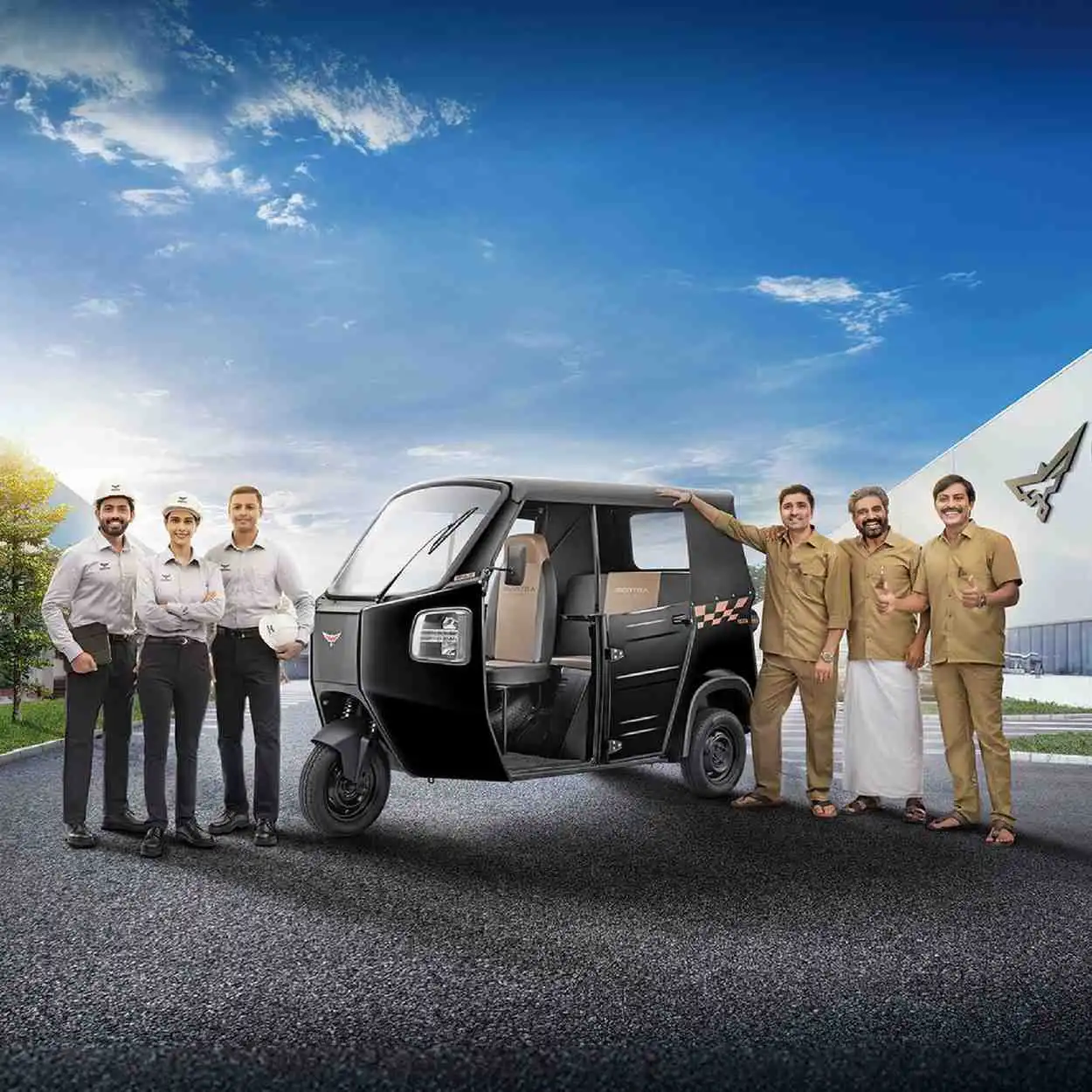
The electric auto rickshaw is more than a vehicle type - it’s a practical, scalable solution to India’s last-mile mobility challenge. For passengers, E auto rickshaws such as Montra Electric Super Auto, offer quieter, cleaner trips. For drivers and fleet owners, electric cargo 3-Wheelers like the Montra Electric Super Cargo deliver predictable operating expenses, higher uptime, and data-driven control. As battery tech improves, charging options expand, and policy support continues, electric auto rickshaws will increasingly shape how Indian cities move.
Frequently Asked Questions
1. What is the typical range of an electric auto rickshaw?
Real-world daily ranges vary, but many modern electric auto rickshaws comfortably cover 80–160 km on a full charge depending on battery size and load.
2. How long does it take to charge an e-auto rickshaw?
Typical full-charge times range from 3 to 6 hours on AC; fast charging and battery-swap options shorten downtime where available.
3. Are E auto rickshaw cheaper than petrol/CNG autos?
When measured by total cost of ownership (TCO) over several years, electric autos often prove cheaper due to lower energy and maintenance costs, though initial price and financing terms matter.
Related Blogs

20 April, 2026 | Blog
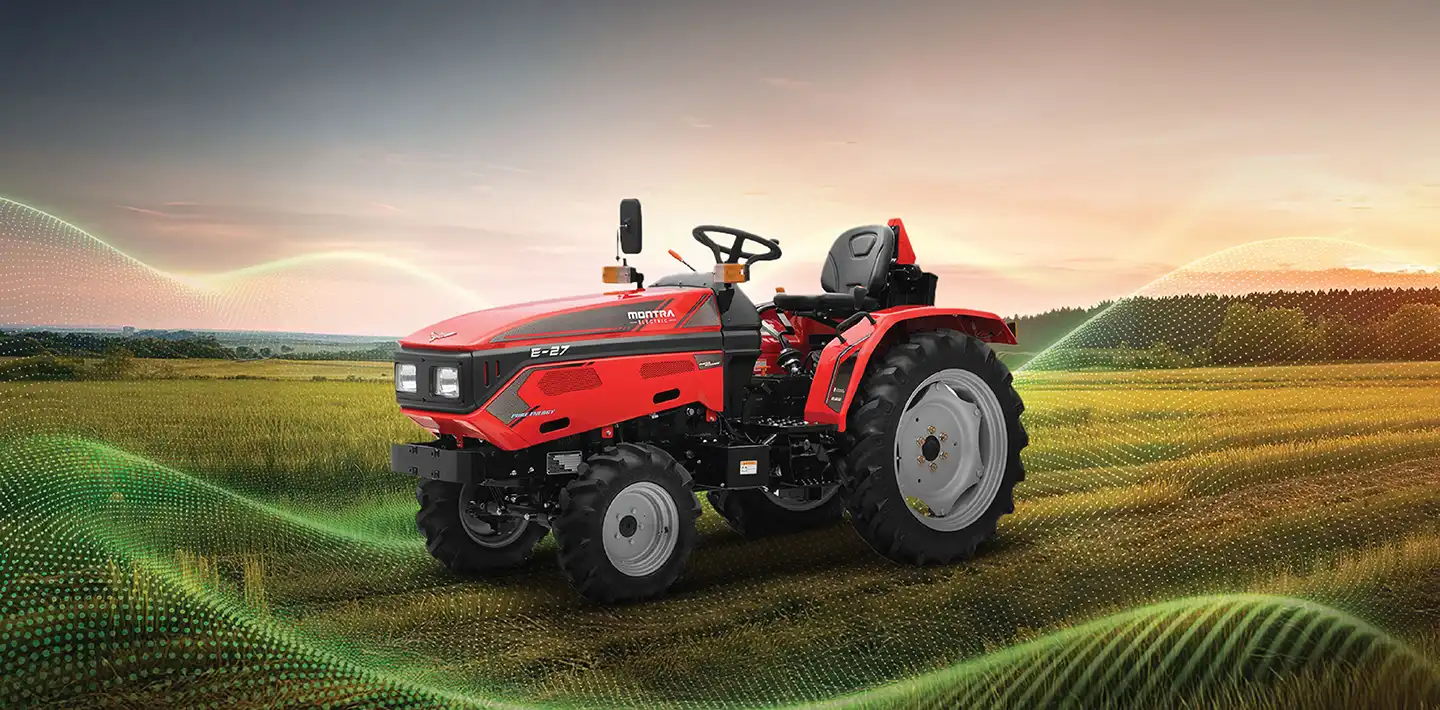
How Electric Tractors Can Reduce Farming Costs for Small & Medium Farmers
Electric tractors help small and medium farmers reduce farming costs by lowering fuel expenses, minimizing maintenance and improving daily work efficiency. With government incentives and reliable performance, electric tractors offer a practical and affordable alternative to diesel machines for cost-effective agriculture.

16 March, 2026 | Blog
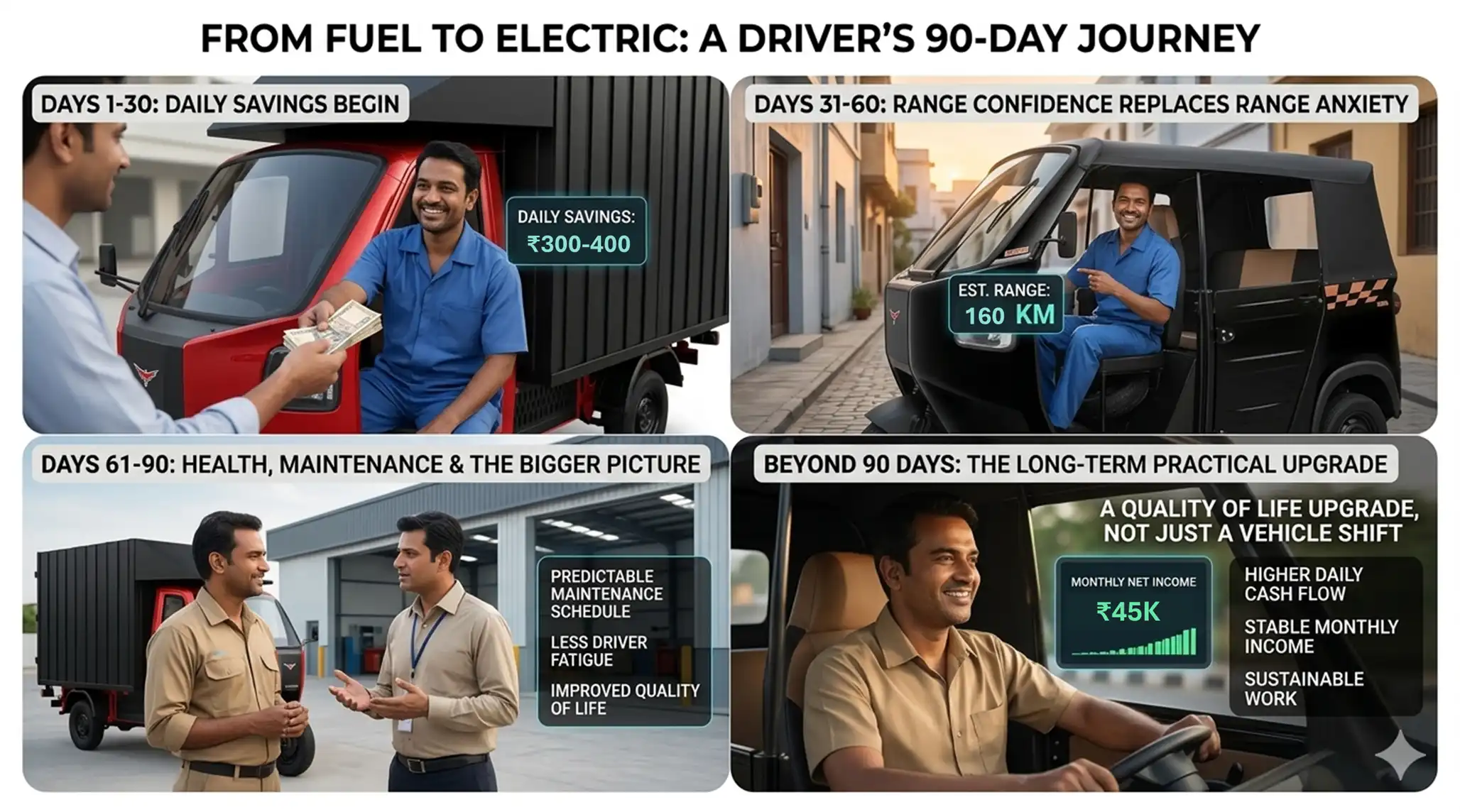
From Fuel to Electric: What Changes for a Last-Mile Driver in the First 90 Days?
The first 90 days after switching to an electric auto reveal real changes for last-mile drivers. Lower daily energy costs, reduced physical fatigue, predictable maintenance and quieter workdays gradually replace fuel stress, making electric mobility a practical upgrade rather than just a technology shift.

Follow us on:


Service: 1800-833-3303
Sales: 1800-833-3301
Mail: customercare@montraelectric.com
Exports: exports@montraelectric.com
Grievance: ethics@ticm.murugappa.com